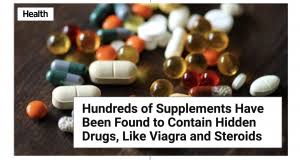
More than two-thirds of Americans ingest some kind of food supplement. Surveys of supplement users have found that 84% of them are confident that the supplements they ingest into their bodies are safe and free of toxic impurities. Indeed, the Dietary Supplement and Health Education Act, passed by Congress in 1994 specifies that all food supplements must be free of contamination and adulteration. But a loophole in that law allows supplement companies to sell various types of food supplements without verification of their safety or purity. The only time such supplements come to the attention of the federal watchdog agency for drugs and supplements, namely the Food and Drug Administration (FDA), is when a substantial number of adverse effects are reported to the agency. Unfortunately, this law also allows more unscrupulous supplement companies to underdose the listed amount of nutrients in their products, and in some cases not to include active ingredients in the products.
{pullquote]Supplements could be contaminated by bacteria and other pathogens.[/pullquote]Supplements could be contaminated by bacteria and other pathogens. In some cases, these pathogenic organisms derive from natural sources and were not added to the product. According to the US Pharmacopeia (USP), dietary supplement ingredients should have no more than 103 and 102 cfu/g counts of aerobic microbes and yeast/mold, respectively. They should also be entirely devoid of Escherichia coli, Salmonella, Staphylococcus aureus, or Clostridium species. Unfortunately, many dietary supplements have microbial contamination. One study analyzed 183 dietary supplement products. One or more toxigenic fungi/mold/yeast were found in alfalfa, coriander, echinacea, garlic, ginkgo, juniper, licorice, psyllium, and St John’s wort supplements. Potentially toxigenic molds of the genera Aspergillus, Penicillium, Alternaria, Fusarium, Eurotium, and Cladosporium were recovered from these products at levels often high enough to indicate that the organisms were growing on the product. No fungi/mold/yeast were found in the vitamin or mineral products tested. Aerobic mesophilic bacteria were found in all products tested during the course of this study, often at greater than the recommended concentrations. In several of the products, fungal and other bacterial levels were also higher than the microbial limits established by the USP.
Another problem is heavy metal contamination. This doesn't mean that the supplements are packaged with a CD of Guns and Roses Greatest hits, but rather that the supplement may contain heavy metals or minerals that are known to produce toxic effects when ingested in larger amounts. Heavy metals have been linked to causing dementia, brittle bones, and other maladies. In one study, the concentrations of heavy metals in 121 dietary supplements purchased in Canada were compared with the concentrations designated for safe daily consumption by the National Science Foundation (NSF) International. Overall, 5% of dietary supplements exceeded the upper limit for arsenic; 1.7% of samples exceeded the levels . . .
Join today and get access to this article and all past and present Newsletters, since September 2014. Each month you’ll get a new issue sent to your inbox. Subscribe today for only $10/month!