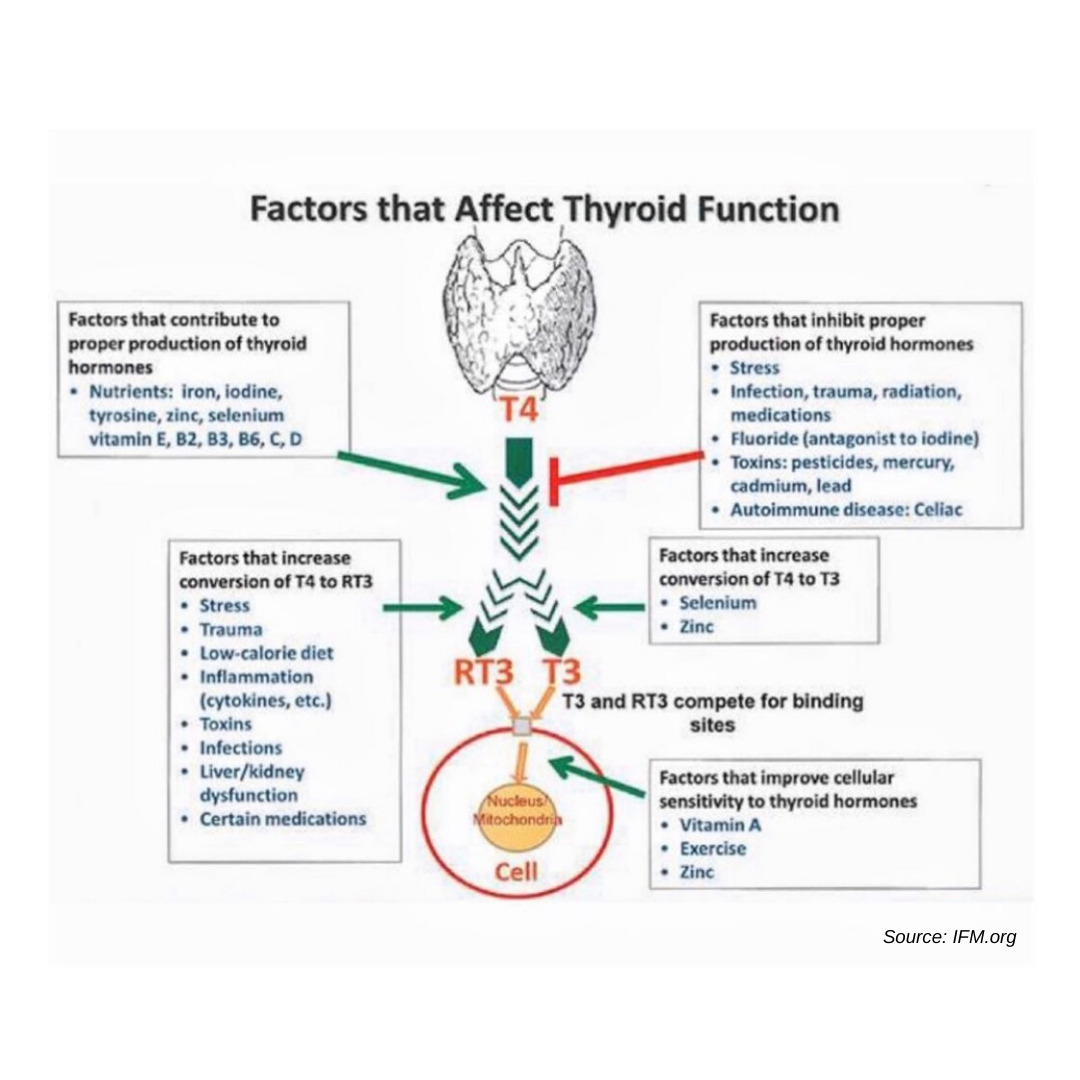
Most people are aware that the thyroid gland through the production of two primary hormones is the master controller of resting metabolism. But the thyroid gland does more than that. It also regulates body temperature, heart rate, and of special interest to bodybuilders, is involved in the metabolism of carbohydrates and fat. It is also important for protein synthesis and without optimal thyroid function, muscle gains can be significantly blunted. The thyroid hormones participate in muscle repair following exercise, important for promoting muscular growth. The thyroid gland itself is located in the front of the neck. Under certain circumstances, such as nutritional deficiencies, the gland can get much larger. This is called a "goiter" and occurs as the gland expands in an effort to trap more of the trace mineral iodine. Indeed, thyroid hormones themselves are composed of iodine and the amino acid tyrosine. The production of thyroid hormone is considered the only known function of iodine.
In the past, thyroid deficiency caused by a lack of iodine was far more common. But with the introduction of iodized salt or salt with added iodine, the level of thyroid problems dropped to the extent that these days it's seen mainly in third-world countries. But recent evidence suggests that lack of iodine may be on the rise as people consume less iodized salt, which was the primary source of iodine. However, the mineral also exists in seafood, with smaller amounts existing in seaweed, dairy foods, and some other foods. What this means in a practical sense is that iodine deficiency is rare in the United States, but it does still occur.
Two types of thyroid problems exist. One involves not enough production of the hormone, or hypothyroidism, while too much thyroid hormone is called hyperthyroidism. However, a period of hyperthyroidism can lead to hypothyroidism. A good example of this is the use of large doses of exogenous thyroid drugs. Bodybuilders and fitness competitors often use thyroid drugs as a means of reducing excess body fat. This is based on the fact that thyroid hormones control the resting metabolic rate. Thyroid drugs are used in the hope of raising the metabolic rate to a degree that causes the body to increase the use of stored fat as a fuel source. But there are many problems related to this notion. For one, to get a hypermetabolic effect from thyroid drugs requires taking doses that exceed what the body produces. The level of thyroid hormone circulating in the blood is monitored by the hypothalamus structure in the brain. As such, when an outside source of thyroid hormone is used, the hypothalamus reduces the secretion of thyroid-releasing hormone or TRH, which causes the thyroid gland to reduce the production of the hormone depending on how outside thyroid hormone is ingested.It's a . . .
Join today and get access to this article and all past and present Newsletters, since September 2014. Each month you’ll get a new issue sent to your inbox. Subscribe today for only $10/month!