The apple sits on my desk, its skin gleaming red under the fluorescent lights. An apple a day keeps the doctor away—we've all heard it. But does this crisp piece of fruit really hold some medical secret, or are we just repeating what our grandparents told us?
A high intake of fruits and vegetables is associated with a decreased risk of death from any cause. What's so special about fruits and vegetables? While fruits and vegetables are over 90% water, they also contain valuable substances that can help prevent the diseases that are most likely to cause death, such as cardiovascular disease (CVD) and cancer. The protective ingredients in fruits and vegetables that provide health protection include a rich dietary fiber content and an assortment of nutrients collectively called "phytonutrients," with "phyto" referring to plant-based. While nearly all fruits and vegetables offer health benefits, some are more beneficial than others. Generally, vegetables are considered more desirable because they often contain fewer carbohydrates than fruits. However, the carbohydrate content of both fruits and vegetables is tempered by their fiber content. The dietary fiber found in fruits causes a slower release of the sugars contained in the fruits. This results in minimal insulin release. Insulin, in the presence of excess calories and carbohydrates, promotes body fat gain.
Among fruits, apples offer something unique for muscle building: ursolic acid, a compound concentrated entirely in the peel. Research shows ursolic acid triggers muscle protein synthesis by boosting growth hormone and IGF-1 levels while activating mTOR, the cellular pathway responsible for muscle growth. It also provides thermogenic effects that accelerate fat loss.
Here's the catch: peeling your apple removes nearly all these protective compounds. Eating only the flesh is like eating egg whites and tossing the yolks—you're discarding the most nutrient-dense portion. If you want apples to work for you, eat them whole.
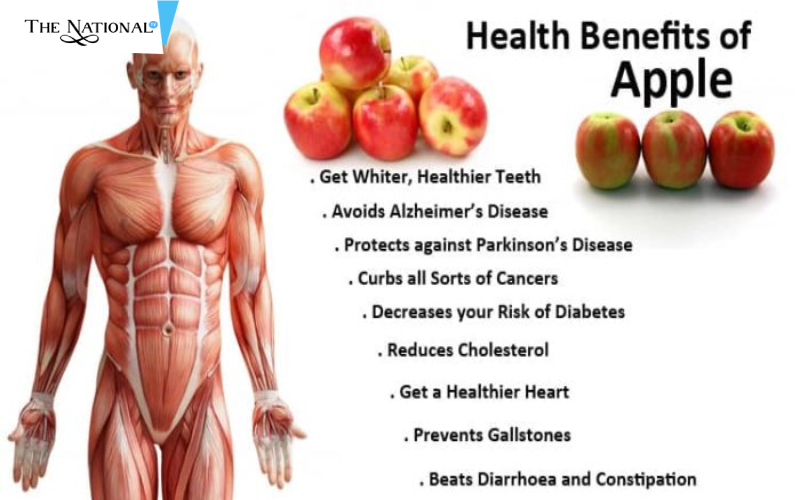
Apples deliver measurable health benefits. Women over 70 who ate just one apple daily were 35% less likely to die from any cause over 15 years compared to non-apple eaters, according to research tracking 1,456 subjects. A Finnish study involving over 10,000 people found a link between apple consumption and lower rates of heart disease, lung cancer, and type 2 diabetes. More recently, a 2020 analysis found that regular apple eaters reduced their stroke risk by 27% and heart disease mortality by 25%."
What are the compounds in apples that offer health benefits?
A medium apple with skin contains 95 calories and 25 grams of carbohydrates—19 of them sugar. But don't let . . .
Join today and get access to this article and all past and present Newsletters, since September 2014. Each month you’ll get a new issue sent to your inbox. Subscribe today for only $10/month!