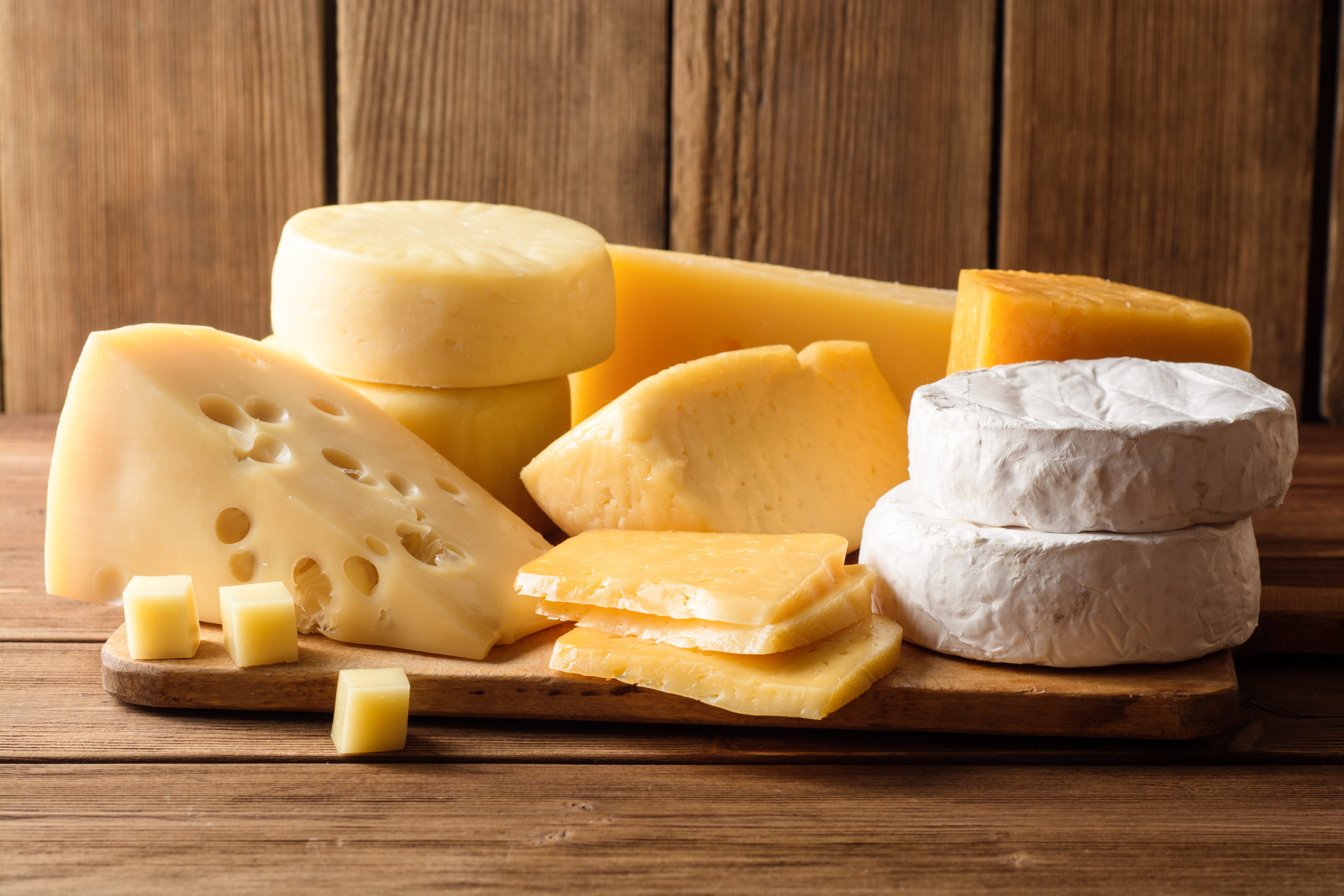
While the greatest attention is given to milk and milk products, such as whey and casein proteins, cheese offers a few benefits that are separate from that of milk. Indeed, cheese can be consumed on diets that eliminate milk and most other dairy products because of the lack of carbohydrates in cheese, along with a lack of fat in low or non-fat cheese products. That makes cheese a nearly pure protein food. Despite this, many people, including bodybuilders and athletes, avoid eating cheese because of notions that it will promote body fat accretion. The truth is that anything consumed in excess can produce increased body fat levels, especially without an exercise component that burns the excess calorie consumption.
When I competed in bodybuilding around the time of Arnold Schwarzenegger's competitive years, I ate the same lunch every day for about 25 years. That lunch consisted of two cans of tuna, along with a half-pound of cottage cheese. That meal alone provided over 100 grams of protein, and since the type of tuna that I consumed was water-pack, I also ingested minimal fat and carbohydrate. I choose to eat this way because it was the standard type of eating among bodybuilders at the time. Indeed, when I asked Dave Draper, an elite professional bodybuilder who won the Mr.America and Mr.Universe titles in the mid-60s, how he developed his fantastic muscularity, his terse answer was " Tuna fish for 5 years." I took that to mean that Dave lived entirely on tuna fish for five consecutive years, quite a feat. But the cottage cheese that I ate had a few nutritional properties that made it an ideal bodybuilding food.
Unlike other types of cheese that undergo fermentation or an aging or ripening process, cottage cheese is fresh cheese. Many wonder what the primary protein in milk, casein, looks like. You only have to view cottage cheese to know what casein looks like since cottage cheese is mostly casein. Of the two primary proteins in milk, casein is considered a long-acting protein because peptides in casein cause it to curdle in the stomach and gradually release amino acids over an extended time, as long as seven hours. This extended-release of amino acids is considered an anti-catabolic effect that limits muscle protein breakdown. Recent studies have shown that ingesting casein after an evening workout and about an hour prior to sleep can promote increased muscle protein synthesis while you sleep, which equals greater muscle gains. This was shown first in younger subjects, then shown to work even better in those over age 40.
Cottage cheese is made from the curds of milk and comes in various forms, such as non-fat, reduced-fat, or full fat. Those curds that cottage cheese is derived from are casein . . .
Join today and get access to this article and all past and present Newsletters, since September 2014. Each month you’ll get a new issue sent to your inbox. Subscribe today for only $10/month!