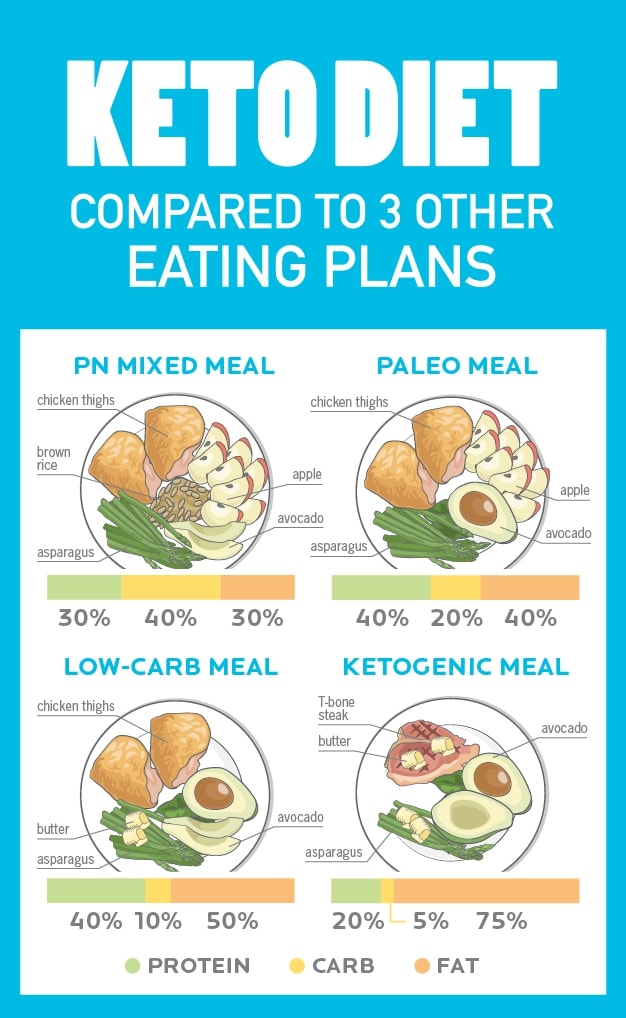
The ketogenic diet, so-named because of the higher production of ketone bodies produced by the diet, first appeared in the 1920s. The original use was to treat children with epilepsy. Although doctors didn't know why eliminating most carbohydrates from the diet could help to prevent the seizures that are typical of epilepsy, they nonetheless knew that it worked. Indeed, a ketogenic diet was the standard treatment for epilepsy in children until the 90s, when drugs replaced the diet as the main treatment for this disease. However, unlike drugs, the ketogenic diet produced no side effects in children, and it could be used safely for extended times. More recently, ketogenic diets have become a popular diet for those who seek to lose excess body fat.
The ketogenic diet is characterized by a total daily carbohydrate intake of 20 grams of carbohydrate or less. Some who ingest the ketogenic diet don't consume any carbohydrates at all. But the truth is that carbohydrates are not essential in human nutrition. The reason for this is because the body requires glucose, the only sugar that circulates in the blood. Glucose, however, can be produced in the liver in a process called gluconeogenesis, where other substances, such as lactate, glycerol from fat, and several amino acids can be converted into glucose. Ketones themselves are metabolic acids, byproducts of incomplete fat oxidation synthesized in the liver. Two main types of ketone bodies exist. One is acetoacetate and the other is beta-hydroxybutyric acid (BOHB). The lack of carbohydrates typical of ketogenic diets causes a low release of insulin. This occurs either during fasting or carbohydrate intake below 50 grams a day. The lack of carbohydrates interferes with normal fat oxidation because carbs supply a substance, oxaloacetate that powers the Krebs energy cycle in cells. After 3 to 4 days of not eating any carbohydrates, the body resorts to using other types of fuel or alternative energy sources. The lack of carbs in the diet, either from fasting or a ketogenic diet, causes the build-up of acetyl coenzyme-A. This substance is converted in the portion of cells called the mitochondria into the three ketone bodies, acetone, acetoacetate, and BOHB. This process is known as ketogenesis, and the important point is that these ketones can be used as an alternative energy source. The lack of insulin secretion that occurs with a ketogenic diet opens the metabolic door to increased fat oxidation. Every published study that has compared conventional diets, such as high carb, low-fat diets to ketogenic diets shows that the ketogenic diets induce far more fat oxidation.[ref]Bueno, NB, et al.Very-low carbohydrate ketogenic diet vs. low-fat diet for long-term weight loss: a meta-analysis of randomized controlled . . .
Join today and get access to this article and all past and present Newsletters, since September 2014. Each month you’ll get a new issue sent to your inbox. Subscribe today for only $10/month!