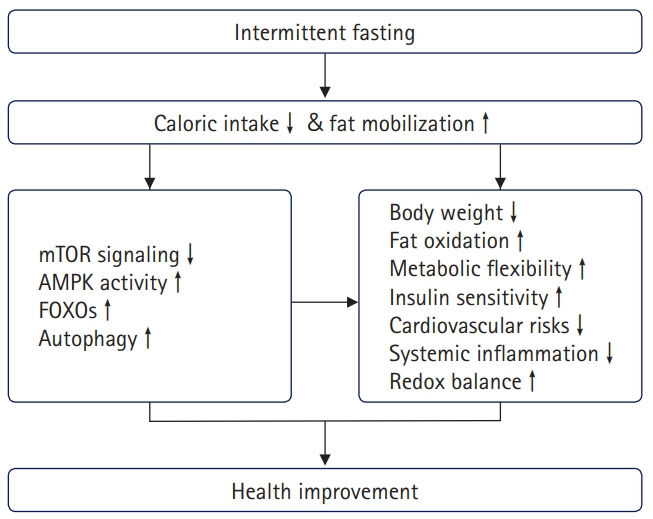
In recent years, the popularity of intermittent fasting (IF) has increased. I've written in Applied Metabolics about the numerous health benefits of IF in past articles, which are available to current subscribers in the online article archive. However, its effect on muscle building is still a matter of contention. Most videos and articles about IF often state that IF has no antagonist effects on muscle building. However, a recent study of one of the most popular forms of IF, known as time-restricted eating, examined its effects on bodybuilders. It found that regular use does seem to blunt anabolic effects in muscles. But what about the effects of more prolonged fasting, such as that done for several days without food? How does that affect muscle gains?
The three primary types of IF are alternate-day fasting, which involves eating normally one day, followed by eating the next day with either a significant calorie reduction or no food. Whole-day fasting involves not consuming any food at all for 1 to 2 days. The third type of IF is time-restricted eating, involving eating only in a specific time frame ranging from 4 to 8 hours. All these forms of IF have one thing in common: A complete lack of protein intake, and that's where the problem lies with IF. How this affects bodybuilding or athletic progress will be discussed later.
But why would anyone want to fast in the first place? Fasting has long been a feature of a few religions. Muslims observe Ramadan during the ninth month of the Islamic calendar. During that month, Muslims fast from dawn to sunset and are not allowed to eat any food or drink anything. Since this practice has been going on for centuries, much of the early research that focused on the health effects of fasting examined Ramadan fasting; these studies showed that the time-restricted fasting that occurred during Ramadan had no adverse impact on training or muscle growth. Despite this, more recent studies showed adverse muscle-building effects following time-restricted fasting. Many people embark on fasts because of their desire to lose excess body fat. And it makes sense that you will lose weight if you aren't eating anything. While weight loss does happen in those who fast regularly, such as a few times each week, several recent studies show no advantages of fasting over traditional lower-calorie diets. One reason is that many people gorge themselves on food when they break the fast, which equals about the same number of total weekly calories they consume on a traditional low-calorie diet.
On the other hand, regular fasting seems to provide some of the same benefits as extended calorie restriction. Calorie restriction or CR is the only way to extend lifespan in several animal . . .
Join today and get access to this article and all past and present Newsletters, since September 2014. Each month you’ll get a new issue sent to your inbox. Subscribe today for only $10/month!