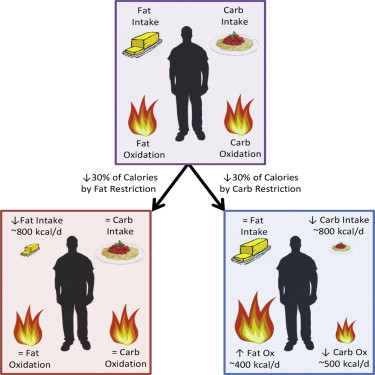
As I noted in the August 2015 issue of Applied Metabolics, the preponderance of published studies that have compared low fat, high carb diets to low carb, high-fat diets has found that the low carb diets invariably result in far more rapid losses of body fat, along with other beneficial effects, such as improved blood lipid profile, which portends to a decreased risk for cardiovascular disease, as well as lowered appetite, which makes diet compliance far easier. The higher protein intake that usually accompanies a well-designed low-carb diet also maintains lean mass while on the diet, as well as supplying an added satiety factor. It all adds up to the fact that nearly all studies that have compared low fat to low carb have found at least twice as much fat loss with the low carb diets. It would appear that the issue is now moot; low-carb diets are simply the way to go if your goal is rapid and effective fat loss.
Most of the basis for low-carb diets revolves around reducing insulin output. Writers who advocate low carb diets, such as Gary Taubes, author of Good Calories, Bad Calories, insist that as long as insulin output is stimulated, fat loss will either be nil, or you will add to existing fat stores. Since carbohydrates are the nutrient that stimulates the greatest release of insulin in the body, eliminating carbs will always lead to fat losses. But critics of this insulin concept often point out that insulin itself is not inherently fattening. Insulin, they say, will only promote body fat accretion when accompanied by an intake of calories that is greater than what is burned through daily physical activity. Adding to the confusion are published isolated cell studies showing that insulin alone is capable of boosting fat cell synthesis of triglyceride, or stored fat. Another problem for those who say that insulin alone is the key to obesity is the often overlooked biological fact that protein itself is a potent promoter of insulin release. Indeed, some amino acids, such as leucine, rival carbs in their ability to invoke a significant insulin release in the body. As such, if the insulin as a major cause of obesity theory was correct, bodybuilders who consume doses of protein that are often 8-times greater than the standard recommended daily intake of protein should be all rotund with not a scintilla of muscular definition evident anywhere. Clearly, this isn't the case. But most bodybuilders, particularly when preparing for a contest appearance, are careful to avoid ingesting excess carbohydrates, although they do maintain a higher protein intake.
So how do low carb critics explain the clearly superior fat-loss results shown by the diets? They suggest that after a while . . .
Join today and get access to this article and all past and present Newsletters, since September 2014. Each month you’ll get a new issue sent to your inbox. Subscribe today for only $10/month!