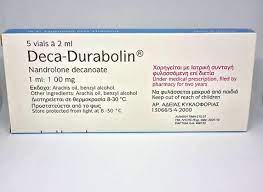
Testosterone (T) levels begin to decline in men at 1 to 2 percent each year starting at age 30. By age 40, many men are clinically deficient in T, as determined by lab tests. In recent years, testosterone replacement therapy (TRT) has become increasingly popular to treat "Low T." Symptoms of Low T include lack of sexual drive and erectile dysfunction, increased fat deposition around the waist, lack of energy, depression, and of most concern to men, decreased ability to build muscle. Testosterone is necessary to build muscle, but precisely how much T is needed for that purpose is still debatable. Depending on which scale you look at, Low T is below 300 on a testosterone lab test. However, many men have what appears to be low T based on lab results, yet they show few symptoms. In nearly every such case, however, the man isn't involved in resistance training and isn't concerned about building muscle. In other instances, Low T is related to body composition. Having a higher body fat level is often accompanied by lower testosterone levels. This is caused by greater estrogen production in body fat through the production of the aromatase enzyme that converts T into estrogen. Estrogen, in turn, produces negative feedback signals to the hypothalamus structure in the brain, which responds by lowering the release of gonadotropins from the pituitary gland. One such gonadotropin, luteinizing hormone or LH, controls T synthesis at the level of the Leydig cells in the testes. So, less LH release means lower testosterone levels. However, many obese men can normalize their low T levels by losing excess body fat without going on TRT.
The standard treatment for diagnosed low T is some form of testosterone replacement. The most common form of T used for this purpose is topical T, which is rubbed on the skin daily. Physicians favor this because it maintains a steady rate of testosterone release that more closely mimics the natural release of T in the body. Topical T forms are considered safe and usually don't produce severe side effects. The drawback to using topical forms of T, however, is that they are designed to bring lagging T levels to the midpoint level of T. Doctors favor this because of the notion that consistently higher levels of T can be associated with a greater risk of possible side effects. However, many men who use the topical forms of T notice that such forms don't seem to have much of an anabolic effect. The topical T preparations will cure most of the symptoms of Low T. Still, they won't promote increased muscle gains because the testosterone levels that result from the drugs aren't high enough to produce significant anabolic effects that favor increased muscle gains. Some men gain muscle after starting topical T drugs but are . . .
Join today and get access to this article and all past and present Newsletters, since September 2014. Each month you’ll get a new issue sent to your inbox. Subscribe today for only $10/month!