You just can't wait to get to the gym to try that new triceps workout that you viewed on YouTube. In the video, 7-time Mr.Olympia Phil Heath revealed his exclusive triceps routine, the one that help propel him to his Mr.Olympia victories. You figure that Phil should know how to train triceps since his massive triceps development offers mute testimony to his expertise. You follow the routine exactly as outlined by Phil in the video, even doing the shorter range of movement favored by Heath. That seems a bit strange to you, but what the hell, Phil Heath must know what he's doing. Sure enough, you get a massive pump and burn when you do the routine at the gym. The 8 grams of citrulline you ingested 45 minutes prior to the workout no doubt added to that pump, which makes you feel as if your triceps have taken on a life of their own and are about to explode off your upper arm attachments. All is well and you envision super arm gains just down the road. Hey, perhaps you can even build triceps that Phil would be impressed with. But a few hours after the workout ends, you feel a deep soreness in your triceps. Just proof you think that the routine was truly effective. And sure enough, within a few more hours, the pain recedes. But the next day your triceps is so sore that you cannot straighten out your arm. Welcome to the world of delayed-onset muscle soreness, better known by its acronym of DOMS.
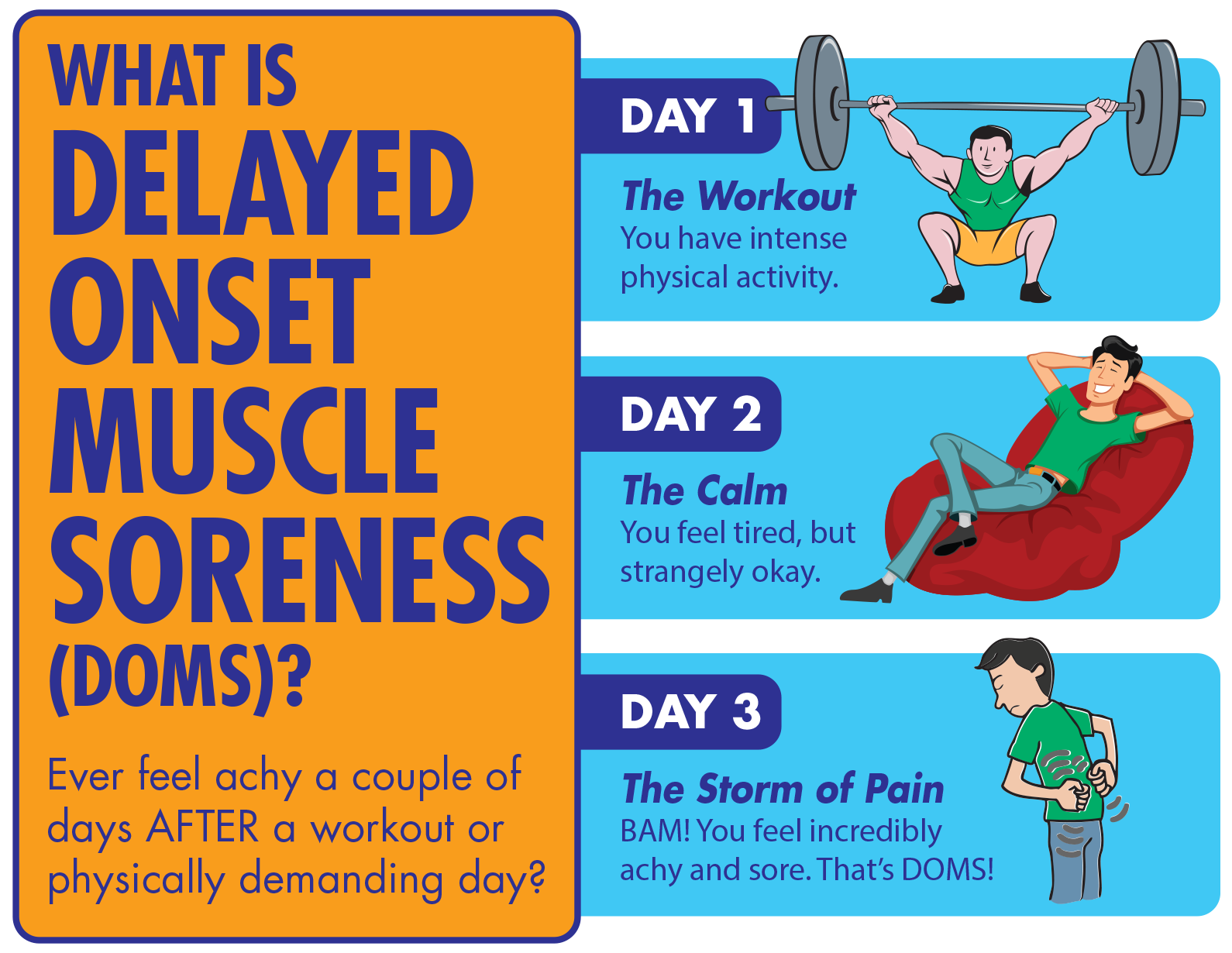
I doubt that anyone who has ever engaged in resistance exercise has been able to avoid DOMS. It often appears when you change your regular training routine and add a new, unaccustomed exercise. But the primary cause of DOMS is eccentric muscle contractions, sometimes referred to as "negative contractions." This usually involves the lowering of a weight (raising the weight often involves concentric muscle contractions). Lowering the weight places more stress on muscle fibers than does raising the weight because the muscle fibers lengthen when you lower the weight, making them more prone to damage. The good news about eccentric muscle contractions is that most research suggests that they are superior to concentric contractions for building added muscular size and strength. The bad news is that these contractions can produce a level of muscular soreness that can be incapacitating.
Muscular soreness is divided into two types. The first one is acute muscle soreness, which you feel right after a workout ends. Of course, this type of soreness must be differentiated from other types of injuries, such as tendon or ligament injuries. But the acute type of muscle soreness lasts for only 4 to . . .
Join today and get access to this article and all past and present Newsletters, since September 2014. Each month you’ll get a new issue sent to your inbox. Subscribe today for only $10/month!