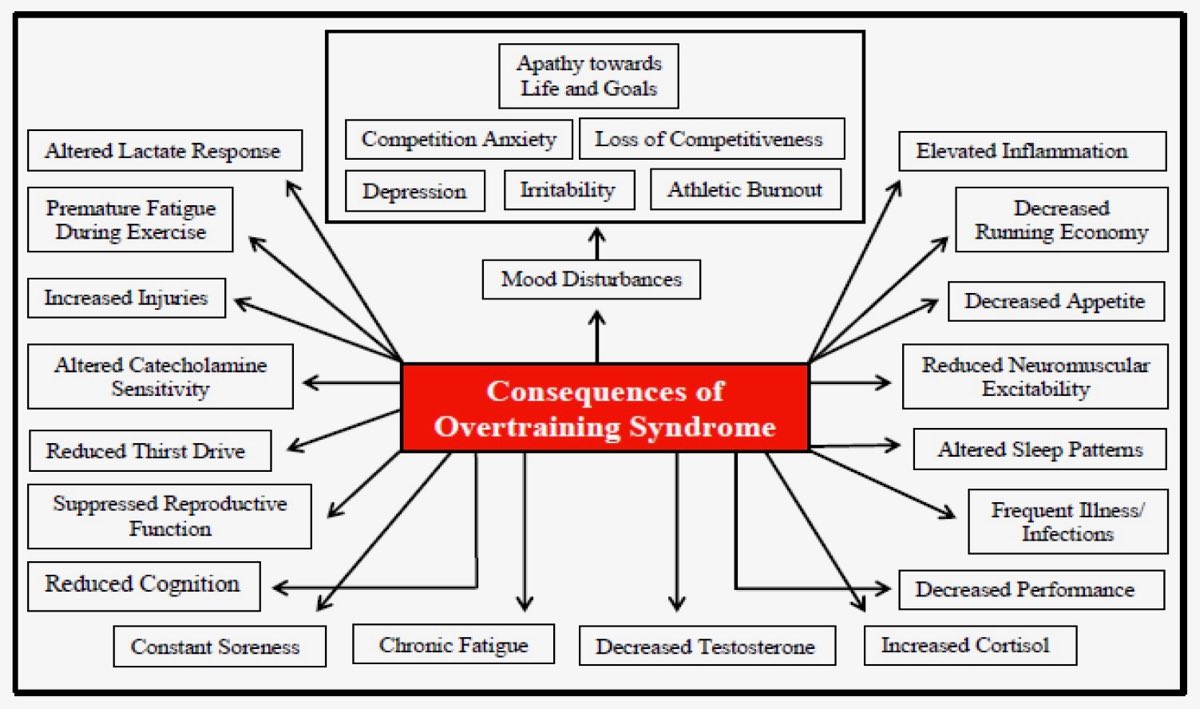
Mistakes are common in bodybuilding, fitness, and sports training. Such mistakes can include poor exercise form, using too much weight, not training with sufficient intensity, resting too long between sets, playing with a cell phone rather than focusing on training, and many others. But by far, the most common mistake that brings all gains in muscular size and strength to a halt is overtraining. Just about everyone who participates in resistance training will sooner or later fall into the overtraining trap. A lot of that has to do with the prevailing notion believed by many that "more is better" or that the more exercise you do, the greater will be the ultimate results. But the truth is that there is always a limit to how much exercise the body can endure and still make progress in terms of added muscular mass and strength. A finite limit exists on how much training is ideal for those purposes.
While it's true that some people can tolerate more exercise than others, there is a limit to how much exercise can be productive in anyone, regardless of genetic factors or even anabolic drug usage. One of the most prominent benefits of using drugs such as anabolic steroids is that they increase exercise tolerance. Those who use steroids can train more frequently and with a greater training volume and still make gains. But even there, a limit does exist. Even heavy steroid users who grossly overtrain will find that their training progress eventually ceases. Indeed, the first sign of overtraining is a lack of progress. No gains happen in either muscle size or strength despite continued training. Another common sign of overtraining is that the workouts become progressively more challenging to the point that a person will begin to dread training. This is understandable if a person is trying to make gains yet doesn't. More subtle signs can include excessive sweating or a greater tendency to overheat in the gym, although that can be more of a reflection of ambient temperature conditions. With an overtrained condition, muscles will feel heavy and stiff, with a more extended period of muscle soreness after the workout.
Overtraining also produces several psychological symptoms. These can include either decreased or increased appetite, Sleep disturbances, a feeling of constant fatigue, inability to focus or concentrate; and loss of training motivation. What many bodybuilders and athletes often overlook is that the muscles grow during rest and recuperative periods, not during training. Without sufficient rest between training sessions, overtraining can rapidly ensue.
I have experienced periods of overtraining many times in my over 60 years of training. When I first began training at age 12, my primary sources of information about how to train came entirely from bodybuilding magazines since other media, such as that on the Internet, didn't exist. Each year . . .
Join today and get access to this article and all past and present Newsletters, since September 2014. Each month you’ll get a new issue sent to your inbox. Subscribe today for only $10/month!