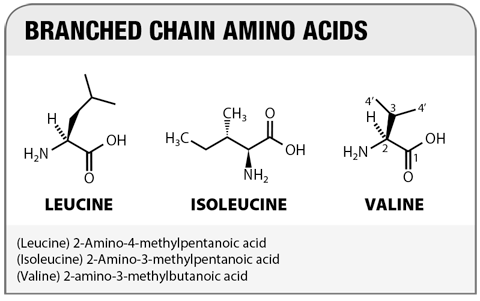
The branched-chain amino acids (BCAA) consist of leucine, isoleucine, and valine. All three are essential amino acids because they cannot be synthesized in the body, but must be supplied by food sources. While most other amino acids are metabolized in the liver following oral ingestion, the BCAA is mostly metabolized in muscle. Indeed, 14% of the amino acids found in muscle consist of the BCAA. For this reason, BCAA is often referred to as the "Muscle Amino Acids." When muscle breaks down during catabolic conditions, such as disease or even when a person consumes too few calories, the amino acids that are initially degraded in muscle are the BCAA. For all these reasons, BCAA has garnered the reputation of having anabolic activity in muscle. And it's true. Of all the amino acids, which are the constituents of protein, the BCAA leucine is by far the single most potent amino acid at promoting muscle protein synthesis (MPS), the cornerstone of increased muscular hypertrophy or growth. But there are several controversies about BCAA. The first one involves whether anyone who is engaged in regular weight-training exercise and is seeking added muscular gains needs to supplement with BCAA. This is a pertinent question not only because of BCAA's potent anabolic effects in muscle, but also because most protein foods, such as meat, fish, eggs, and milk all contain significant amounts of BCAA. The usual anabolic supplement dose of BCAA is 20 grams with a specific ratio between the three amino acids that make up BCAA. Generally, this ratio consists of 3;1;1 of leucine, isoleucine, and valine. Further confusing this recommendation, however, is past research showing that ingesting isoleucine and valine with leucine decreased the anabolic effects of leucine through a competition among the three amino acids for uptake into the body. But more recent studies have found an opposite effect: ingesting all three BCAA produces more anabolic effects in muscle than does leucine alone, although leucine remains the single most potent amino acid for this purpose.
Indeed, one study involved a dose of protein that provided only 6.25 grams of protein. This is considerably below the suggested minimal dose of 20 grams of protein needed to promote MPS. But when about 3 grams of leucine was added, even this small dose of protein was enough to duplicate the MPS effects of ingesting 25 grams of protein. Since the actual amount of essential amino acids needed for efficient MPS is 10 grams, this study suggests that leucine alone is more potent than 10 grams of other amino acids combined in promoting MPS
When you ingest BCAA during prolonged exercise lasting more than two hours, it will help to spare limited muscle and liver glycogen stores. Glycogen is a form of stored carbohydrate and by sparing . . .
Join today and get access to this article and all past and present Newsletters, since September 2014. Each month you’ll get a new issue sent to your inbox. Subscribe today for only $10/month!