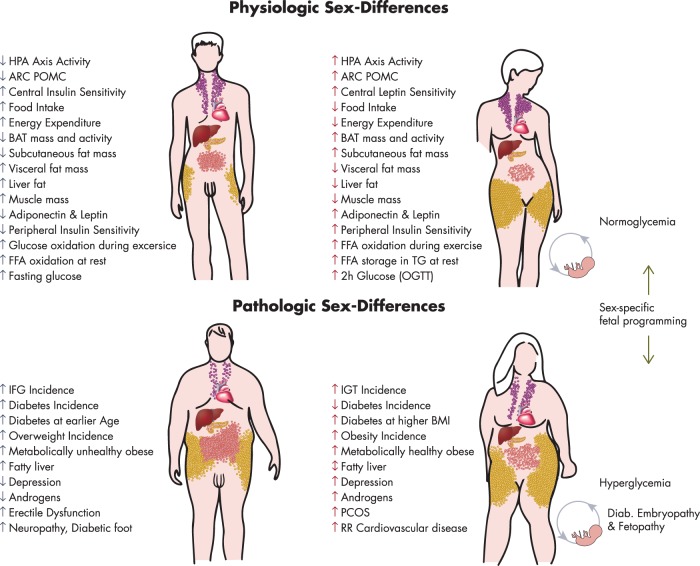
While men and women share much of the same biological blueprint, evolution has shaped their bodies in distinctly different ways. Women typically have narrower shoulders, wider hips, and a more defined waist — the classic "hourglass" silhouette that appears across cultures and throughout human history. Anthropologists describe this as a secondary sexual characteristic, meaning it serves as a biological signal rather than a direct reproductive function. The specific proportions of a woman's waist and hips are thought to advertise fertility to the more instinctive, subconscious regions of the male brain — a signal that has been hardwired into human perception over millions of years of evolution.
This drive toward attraction is, at its core, nature's way of ensuring the survival of the species. The pleasure associated with sex is not incidental — it is by design, an evolutionary incentive that encourages reproduction across virtually all animal life.
The female breast is another powerful example of biology serving a dual purpose. Its primary role is lactation — producing nutrient-rich milk uniquely calibrated to support a newborn's development and immune system. Yet breasts also function as a visual signal, one that many men find attractive, possibly on an instinctive level. Zoologist and anthropologist Desmond Morris, in his landmark work The Naked Ape, proposed a striking theory: because most mammals mate in a rear-entry position, the rounded shape of the female breast — particularly when viewed from the front — may echo the visual cue of the buttocks, triggering a deep, pre-conscious attraction. Whether or not one finds the theory convincing, it illustrates just how far back the roots of human attraction actually run.
What female breasts and broader hips have in common is that both are largely shaped by the same underlying mechanism: the way women's bodies distribute fat. While the breasts do contain glandular tissue responsible for milk production, the majority of their volume is made up of what biologists call sex-specific fat — adipose tissue whose location is determined by female hormones rather than caloric intake alone. The same hormonal influence drives women to store fat preferentially in the hips, buttocks, and upper thighs, producing the characteristic curves of the female form.
For many women, however, this fat distribution is a source of frustration. Lower-body fat in women is not only accumulated more readily than in men — it is also stubbornly resistant to loss. This is not simply a matter . . .
Join today and get access to this article and all past and present Newsletters, since September 2014. Each month you’ll get a new issue sent to your inbox. Subscribe today for only $10/month!