Ask any bodybuilder what keeps him up at night, and you'll rarely hear injury or a bad show placing. You'll hear about the workout he missed. Training through a head cold, rescheduling a flight around chest day, apologizing to a spouse from the gym parking lot — the behavior looks like devotion from the inside, and something closer to compulsion from anywhere else.
The instinct isn't baseless. Muscle is built through consistent training, and nobody grows on a program they follow when convenient. But somewhere between that truth and the panic over a single skipped session, the math goes badly wrong.
Researchers noticed the panic decades ago. Beginning in the 1970s, a series of studies found that habitual exercisers deprived of training reported irritability, restlessness, insomnia, and guilt within days — a cluster of symptoms that acquired the name exercise dependence, and, in its more excitable popular framing, exercise addiction. The withdrawal comparison was too good for magazines to pass up, and it stuck.
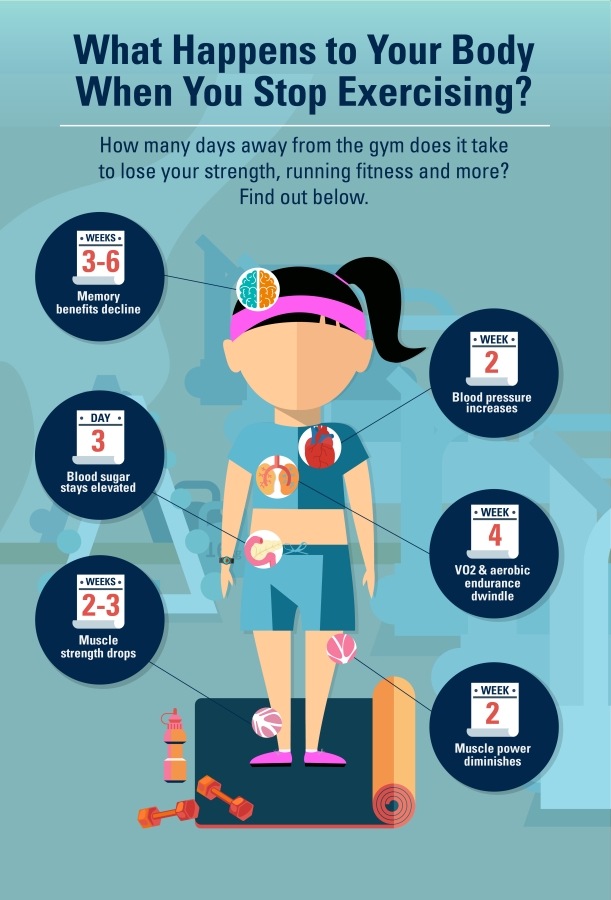
So the question worth asking isn't whether missing a workout feels bad. Anyone who has tried it knows it does. The question is whether anything is actually happening to your muscle in those days off — and the answer is far less dramatic than the dread suggests.
Bill Pearl won Mr. America in 1953, and four Mr. Universe titles across nearly two decades, the last in 1971 at age forty-one. He was also the sport's great evangelist for consistency, and he liked to say he hadn't missed a workout in over thirty years. Whether that's literally true matters less than what it did to everyone who heard it. A generation of lifters absorbed the lesson that a missed session was a character flaw.
Joe Abbenda took the opposite approach and did fine. He won Mr. America in 1962 and Mr. Universe the same year, then again in 1963. In an article he wrote shortly after winning Mr. America, which I read as a kid and have thought about ever since, he mentioned something that struck me as heresy: every summer, he stopped training for two months.
His reasoning was entirely practical. Abbenda trained in a garage behind his parents' house in New York, and anyone who has spent July in that city knows what an unventilated garage does in August. The heat pushed past a hundred degrees, the humidity made every set miserable, and instead of grinding through it, he simply closed the door until September.
What he reported on returning is the part worth sitting with. No meaningful loss of size. No collapse in strength. He picked up in the fall roughly where . . .
Join today and get access to this article and all past and present Newsletters, since September 2014. Each month you’ll get a new issue sent to your inbox. Subscribe today for only $10/month!