Until recently, intermittent fasting (IF) was largely confined to religious practice. Muslims observe Ramadan, a month-long fast from dawn to dusk during which even water is forbidden. Jews observing Yom Kippur, the holiest day of the Jewish calendar, fast for 25 hours. Because both traditions involve defined cycles of eating and abstention, they align with what researchers now classify as intermittent fasting.
IF began gaining mainstream traction around 2012, driven by several independent voices. BBC journalist and physician Dr. Michael Mosley produced the documentary Eat Fast, Live Longer and co-authored The Fast Diet, which introduced the 5:2 method — a pattern of eating normally for five days while restricting intake to 500–600 calories on two non-consecutive days — to a wide audience. That same year, Kate Harrison published The 5:2 Diet, drawing on her own experience following the protocol. In 2016, Canadian nephrologist Dr. Jason Fung expanded the conversation with his bestseller The Obesity Code, arguing that IF addresses not only obesity but also insulin resistance and a range of related metabolic conditions.
IF's popularity grew further when celebrities began publicly adopting the practice, though typically with weight loss rather than metabolic health as their primary goal. Actor Hugh Jackman, for example, reportedly combined the 16/8 method — fasting for 16 hours and eating within an 8-hour window — with a high-calorie, high-protein diet while preparing for his role as Wolverine. Such high-profile endorsements brought IF to audiences well beyond the medical and wellness communities.
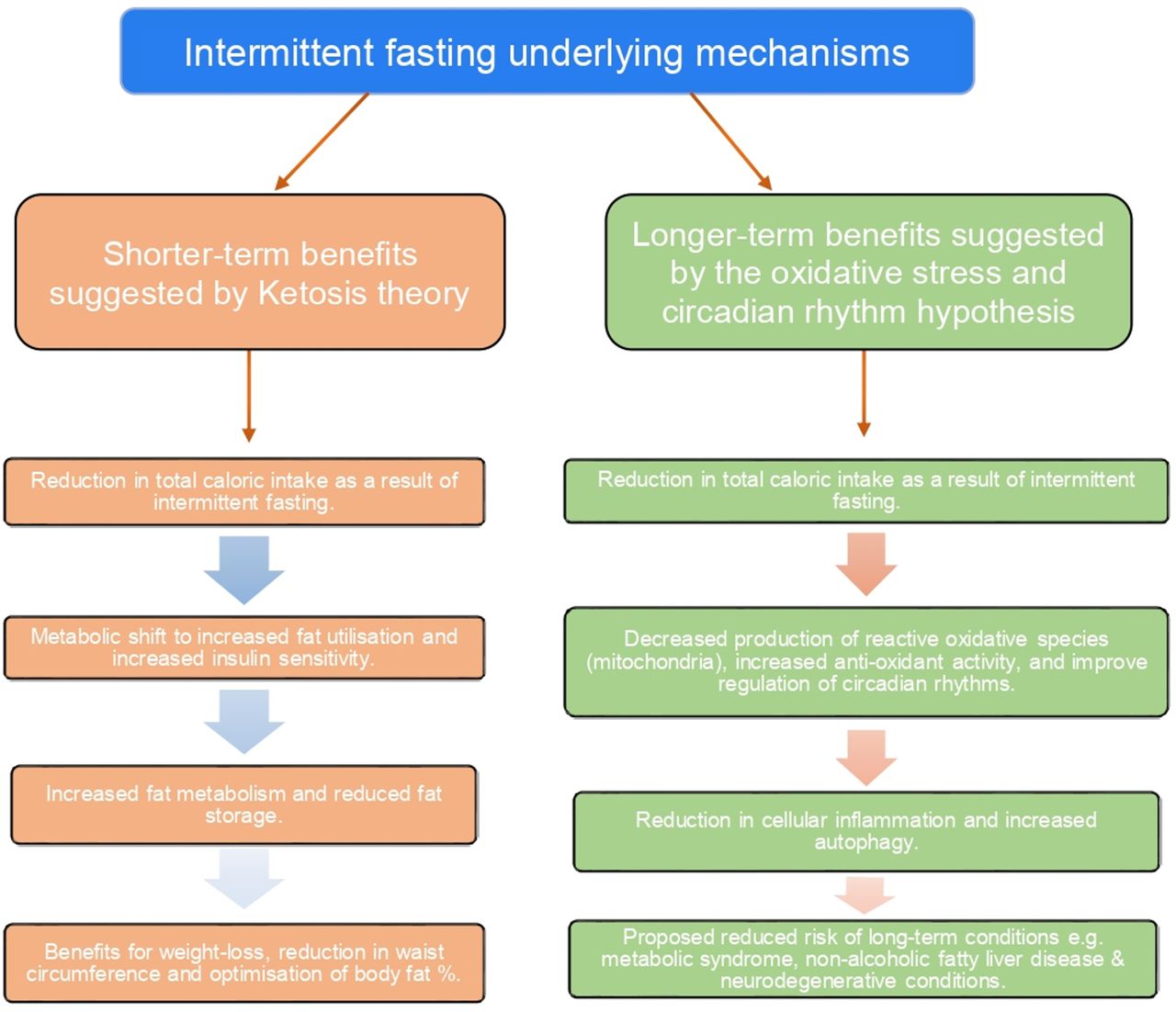
The potential health benefits of IF extend beyond weight management. Emerging research suggests the practice may help prevent insulin resistance and reduce the risk of type 2 diabetes, a finding with significant implications given the global prevalence of both conditions.
Research suggests that IF may produce life-extending effects comparable to those of calorie-restriction (CR) diets — an approach that involves reducing daily caloric intake by roughly 25 to 35%. The longevity effects of CR were first documented in animal studies during the 1930s, and subsequent research demonstrated extended lifespans across a range of species. Critically, however, most of these early studies involved non-human subjects, and whether the same mechanisms operate with the same magnitude in humans remains an open and actively studied question.
What CR reliably produces in both animals . . .
Join today and get access to this article and all past and present Newsletters, since September 2014. Each month you’ll get a new issue sent to your inbox. Subscribe today for only $10/month!