The thyroid gland — a butterfly-shaped structure sitting quietly at the base of the neck — is the body's metabolic thermostat. It produces two primary hormones: thyroxine (T4) and the more potent triiodothyronine (T3), which is roughly five times more metabolically active than its precursor. T4 functions largely as a prohormone, circulating through the bloodstream until enzymes in the liver and thyroid convert it into active T3. From there, T3's influence extends far beyond metabolism alone — it coordinates with testosterone, growth hormone, and other chemical messengers to regulate tissues and organs throughout the body. That reach includes muscle tissue, where thyroid hormones play a surprisingly double-edged role: within normal ranges, they support anabolic processes, but in excess, they become catabolic, actively breaking down muscle. It's a lesson many bodybuilders have learned the hard way, having pushed thyroid hormone doses in pursuit of leaner physiques — only to find themselves losing the muscle they'd worked hardest to build.
To understand why that backfire happens, it helps to know how the thyroid regulates itself. The hypothalamus — a small but command-central structure in the brain — continuously monitors thyroid hormone levels in the blood. When levels run low, it releases thyroid-releasing hormone (TRH), which travels to the pituitary gland and triggers the release of thyroid-stimulating hormone (TSH). TSH then travels through the bloodstream to the thyroid gland, signaling it to increase hormone production. It's an elegant feedback loop — but one that can be hijacked. When athletes flood their systems with synthetic T3, such as the drug Cytomel, the hypothalamus reads the excess and does exactly what it's designed to do: it shuts the signal down. TRH output drops, TSH follows, and the thyroid — no longer receiving the stimulus it needs — goes quiet. The result is the very condition the athlete was trying to outrun: hypothyroidism, with its sluggish metabolism and tendency to accumulate body fat.
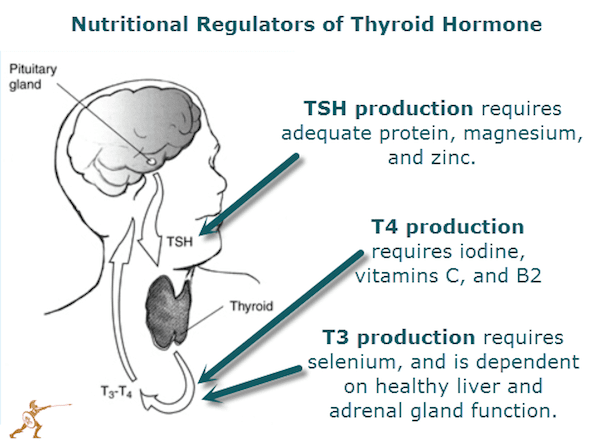
Thyroid hormone synthesis doesn't run on physiology alone — it depends heavily on raw materials. Without adequate levels of certain key nutrients, the entire production process stalls. That dependency is well established, but a more surprising influence has emerged from an unlikely place: the gut. The intestinal microbiome — the dense, dynamic community of bacteria, fungi, and other microorganisms colonizing the colon — was long dismissed as a biological footnote, notable mainly for producing a handful of vitamins. That view has since been overturned. A growing body of research now shows that the microbiome exerts a sweeping influence on human health, shaping everything from digestion and nutrient absorption to body composition, cardiovascular function, and hormonal balance. Thyroid output, it turns out, is no exception.
What follows is an extensive review of the nutrients vital for the optimal synthesis of thyroid hormones.
Join today and get access to this article and all past and present Newsletters, since September 2014. Each month you’ll get a new issue sent to your inbox. Subscribe today for only $10/month!